Best Bottles for Babies With Feeding Issues: What Actually Matters
If you've spent hours googling, reading reviews, and ordering bottle after bottle hoping something will finally work, you're doing everything right, and it's still not working. That exhaustion is real. Watching your baby struggle at the bottle and not being able to fix it is one of the hardest things to sit with as a parent. You deserve real answers, not another vague "every baby is different" and a list of Amazon bestsellers.
As a feeding therapist, I look at bottles differently. I'm not evaluating ease of cleaning or cute design. I'm asking questions like, does this nipple require baby to actively work for the milk, or does it just let milk pour in passively? Does it support the suck-swallow-breathe sequence? Does the flow rate give us enough control for paced feeding?
These are the questions that actually move the needle, and they're behind every recommendation in this guide.
Finding the best bottle for babies with feeding issues isn't about grabbing the most popular option off the shelf. It's about matching the bottle's mechanics to your baby's specific oral motor needs. As a feeding therapist, these are the bottles I recommend most often in clinical practice.
Best Bottle Recommendations for Babies With Feeding Issue
🍼 Pigeon Baby Bottle
Best For: Babies with tongue tie, shallow latch, or who are transitioning from breast to bottle
Why I Recommend It
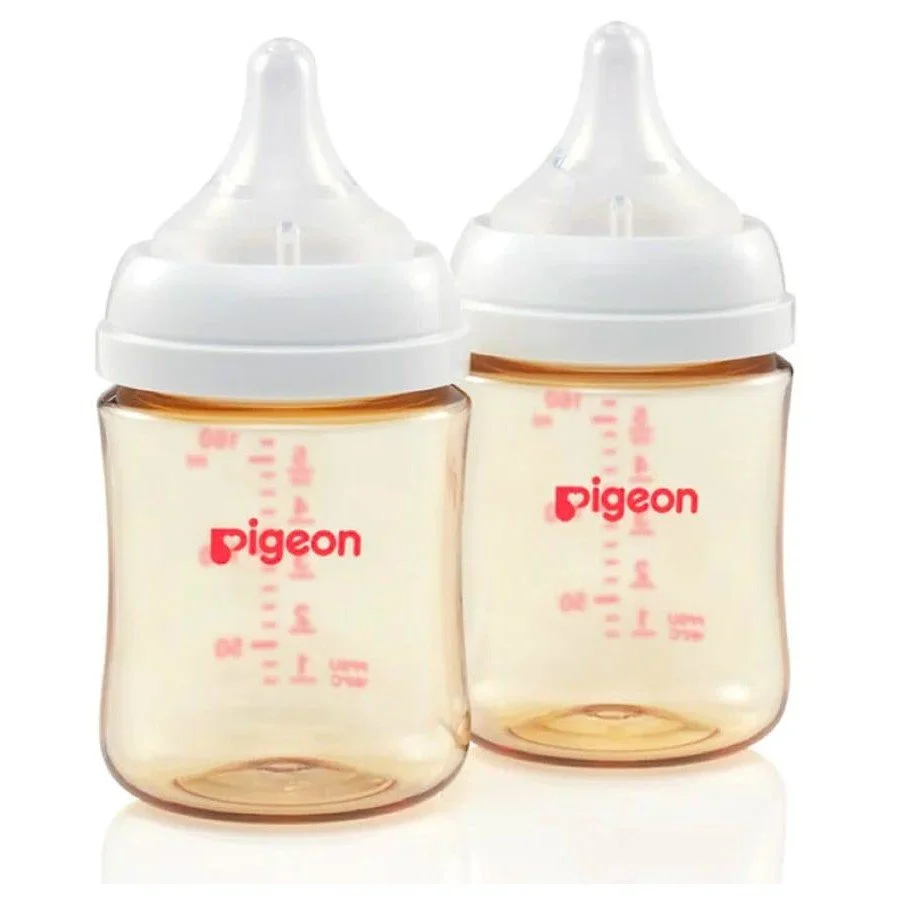
The Pigeon is one of my top clinical picks for babies with feeding issues, and the reason comes down to how the nipple is designed. It requires active tongue peristalsis — meaning baby has to work the milk out the same way they would at the breast, rather than passively letting it flow in. For babies with tongue tie or disorganized tongue movement, this gives the tongue something productive to do, which supports better oral motor patterning over time. The slow, consistent drip also makes paced bottle feeding much more manageable.
Key Features
Nipple flow rate & shape: Wide, breast-like nipple with a slow, consistent flow rate
Nipple material: Soft silicone
Venting system: Standard air valve
Bottle shape: Ergonomic design, easy for caregivers to hold during paced feeding
Who It Works Best For
Babies with tongue tie, shallow latch, disorganized tongue movement, or those making the breast-to-bottle transition. Also a strong choice for babies post-frenectomy who are rebuilding oral motor patterns.
Potential Drawbacks
Limited flow rate options, which may not suit faster-feeding older babies
Less widely available in physical stores; usually needs to be ordered online
Pacing-Friendly? Yes
Available At: Amazon, specialty baby retailers, Buy Buy Baby
🍼 Dr. Brown's Natural Flow (Original)
Best For: Babies with reflux, gas, colic, or laryngomalacia
Why I Recommend It
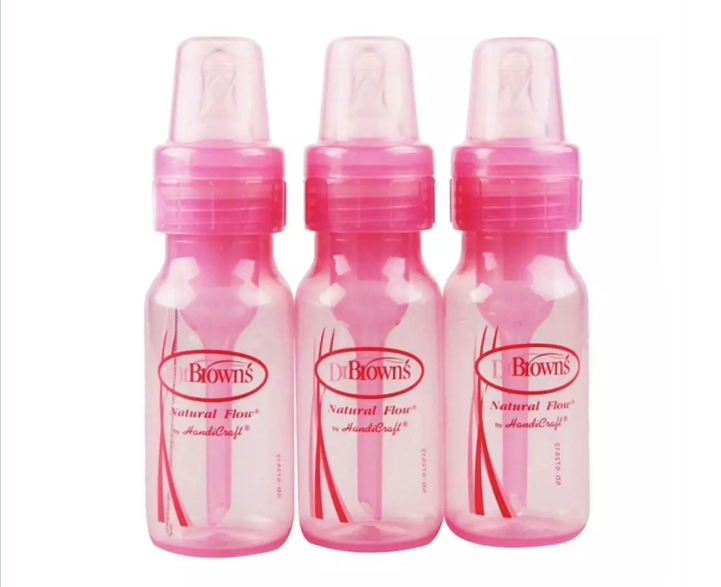
Dr. Brown's is my first recommendation when reflux or airway issues are part of the clinical picture. The internal vent system is genuinely one of the best on the market — it fully removes the vacuum from the bottle so baby isn't gulping air with every swallow. For babies already working hard to coordinate suck-swallow-breathe, that difference is significant. The Level 1 nipple also flows very slowly, which gives caregivers the control they need for effective paced feeding.
Key Features
Nipple flow rate & shape: Level 1 slow flow, traditional rounded nipple shape
Venting system: Two-piece internal vent system — fully eliminates bottle vacuum
Nipple material: Soft silicone
Bottle shape: Standard straight cylinder
Who It Works Best For
Babies with reflux, GERD, colic, gas, laryngomalacia, or any airway involvement that makes the suck-swallow-breathe sequence harder to coordinate. One of the best bottles for babies with feeding issues related to digestion or airway.
Potential Drawbacks
Multiple small parts make cleaning more time-consuming than most bottles
The vent system must be assembled correctly or it loses its primary benefit
Pacing-Friendly? Yes
Available At: Amazon, Target, Walmart, Buy Buy Baby
🍼 Lansinoh Momma (NaturalWave Nipple)
Best For: Breast-bottle combo feeders and babies with latch difficulty
Why I Recommend It
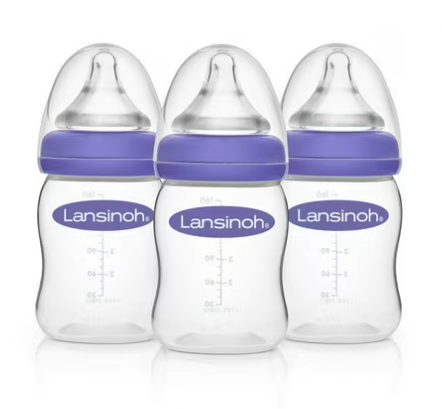
The NaturalWave nipple has a unique flexing, wave-like motion that requires baby to use active compression rather than passively receiving milk. That active work is exactly what I want to see clinically especially for babies post-frenectomy who are rebuilding oral motor patterns. It's also one of the most affordable clinician-recommended options on the market, which matters when families have already spent a significant amount trialing different bottles.
Key Features
Nipple flow rate & shape: Flexible, wave-motion nipple with slow to medium flow
Venting system: Integrated anti-colic vent
Nipple material: Ultra-soft silicone
Bottle shape: Standard with ergonomic grip
Who It Works Best For
Babies with latch difficulty, those post-frenectomy rebuilding oral motor patterns, and families navigating breast-bottle combination feeding. A great entry point for caregivers looking for the best bottle for babies with feeding issues on a budget.
Potential Drawbacks
Fewer flow rate options compared to some clinical brands
May require caregiver education to ensure the active compression benefit is being used correctly
Pacing-Friendly? Yes
Available At: Amazon, Target, Walmart, Buy Buy Baby
🍼 mōmi babypace® 2
Best For: Breastfed babies being introduced to a bottle for the first time, especially those at risk for nipple preference
Why I Recommend It
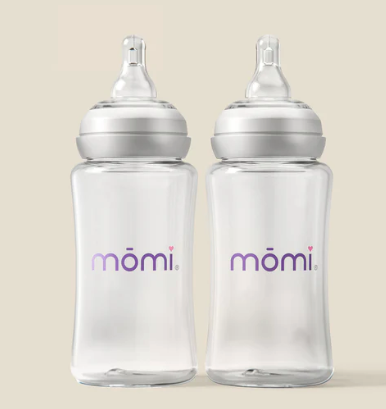
What sets the mōmi apart clinically is the compression shut-off built directly into the nipple — milk only flows when baby is actively feeding in their instinctive suck-swallow-breathe rhythm, which means passive guzzling isn't possible. This is significant because it removes much of the burden of paced feeding technique from the caregiver; the bottle is doing that work by design. The nipple also stretches to reach baby's palate, supporting active tongue elevation and compression — particularly valuable post-frenectomy or when working on oral motor retraining.
Key Features
Nipple flow rate & shape: Compression shut-off mechanism; elongated, stretchy nipple that reaches the palate
Venting system: Integrated into the compression shut-off design
Nipple material: Stretchy, ultra-soft silicone
Bottle shape: Slim, ergonomic
Who It Works Best For
Breastfed babies being introduced to a bottle for the first time, babies at risk for nipple preference, and babies post-frenectomy working on oral motor retraining. Also a strong choice when tongue elevation and active compression are clinical targets.
Potential Drawbacks
Premium price point and less available in physical retail stores
The compression mechanism requires some baseline oral motor ability; may not be the best fit for babies with very low muscle tone
Pacing-Friendly? Yes
Available At: momifeeds.com, Amazon, select specialty retailers
The Right Bottle Is a Starting Point, Not the Finish Line
I hope this guide takes at least some of the guesswork off your plate. Finding the best bottle for babies with feeding issues is rarely a straight line. It takes trial, adjustment, and often a trained eye to figure out what's really going on and why.
If you've tried multiple bottles and your baby is still struggling, that's not a sign to try harder on your own. It's a sign that your baby may need a more individualized approach. Sometimes the bottle itself isn't the issue at all, it's the latch, the positioning, the flow rate, an undiagnosed tie, or an underlying oral motor challenge that no product can solve on its own.
That's exactly what I help families work through. If you're ready to stop guessing and get a clear picture of what your baby needs, I'd love to support you. Book a Free Discovery Call here.