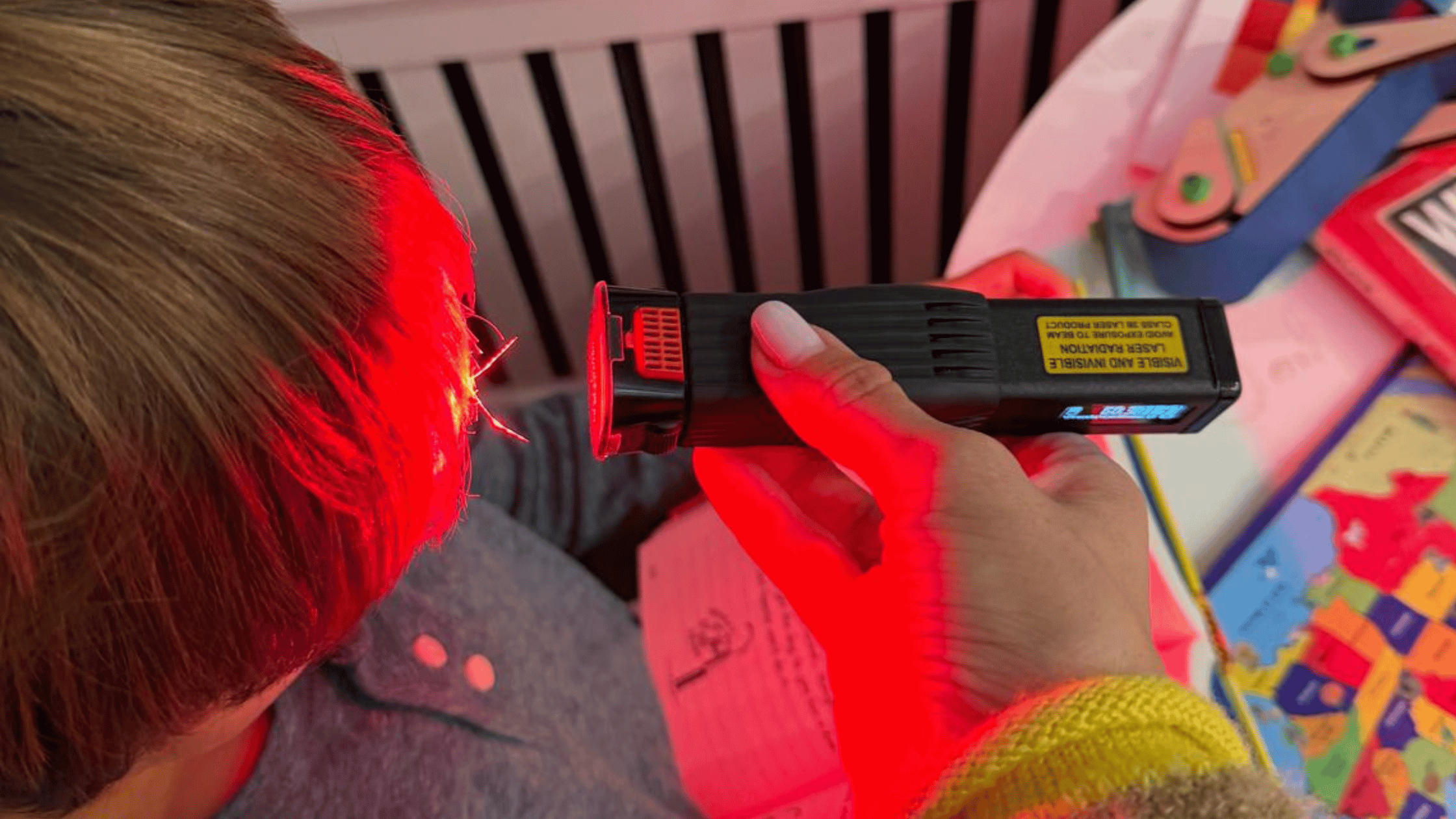
Your child has been going to therapy every week for months.
You've driven to every appointment, practiced at home, and cheered every small win. And yet something feels off. The progress is slower than you expected. Skills that seemed to click in the session disappear by the time you get home.
You're not imagining it. Many parents reach a point where they start asking whether weekly therapy vs. intensive therapy for children is actually the right comparison to be making. Because slow progress isn't always about the child. Sometimes, it's about the format.
This post will walk you through how each approach works, where weekly therapy falls short, and how to figure out which format is right for your child right now.
How Weekly Therapy Works (and Where It Falls Short)
Weekly therapy is the standard model for a reason.
One or two sessions per week, usually 30 to 60 minutes each, provides ongoing support for children who need steady, long-term guidance. It works well for maintenance, mild delays, and situations where the goal is gradual, consistent progress over time.
But here's what most parents never hear: the brain needs repetition within a tight window to truly lock in new skills.
When too many days pass between practice opportunities, the neural pathways being built don't get reinforced quickly enough. Skills get partially learned, then fade, then re-learned, then fade again. This cycle is what therapists call a plateau, and it can feel incredibly discouraging when you're living through it.
What a plateau actually looks like:
Your child does great during the session
Their therapist is pleased with in-session performance
By the following week, most of what was practiced has faded
Progress charts show small gains that flatten out over time
Your child isn't regressing, but they're not moving forward either
This doesn't mean weekly therapy is bad. It means weekly therapy isn't designed for every child at every stage. For children who are stuck, who have a specific window of neurological readiness, or who need to make meaningful progress before a major milestone, the spacing between sessions can be the very thing holding them back.
If you're still weighing the basics of each format side by side, this pros and cons breakdown is a good place to start.
What Intensive Therapy Actually Is
Intensive therapy isn't just "more therapy." It's a fundamentally different approach built around how the brain actually learns.
In a typical intensive program, a child receives concentrated hours of therapy over a compressed timeframe, usually three to five hours per day across two to four weeks. The goal is to capitalize on what neuroscientists call the neuroplasticity window: the period when the brain is most receptive to building and strengthening new connections.
The research behind it
Massed practice (a high volume of practice compressed into a short period) produces faster skill consolidation than the same total hours spread across weeks or months. It's not just about how many hours your child practices. It's about how close together those sessions are.
Think of it this way: imagine your child is learning to ride a bike.
Practicing 20 minutes once a week means the first half of every session is spent remembering where they left off. Now imagine practicing for two hours every day for two weeks. The brain doesn't get a chance to forget. The skill builds on itself every single session.
That's the power of the intensive format.
A note on program types
Not all intensive programs are the same. Some are general, designed to address a range of speech or feeding delays. Others, like neuroadaptive intensive programs, are specialized and individually tailored, adjusting pace and approach to match each child's specific nervous system profile.
Weekly vs. Intensive: A Side-by-Side Look
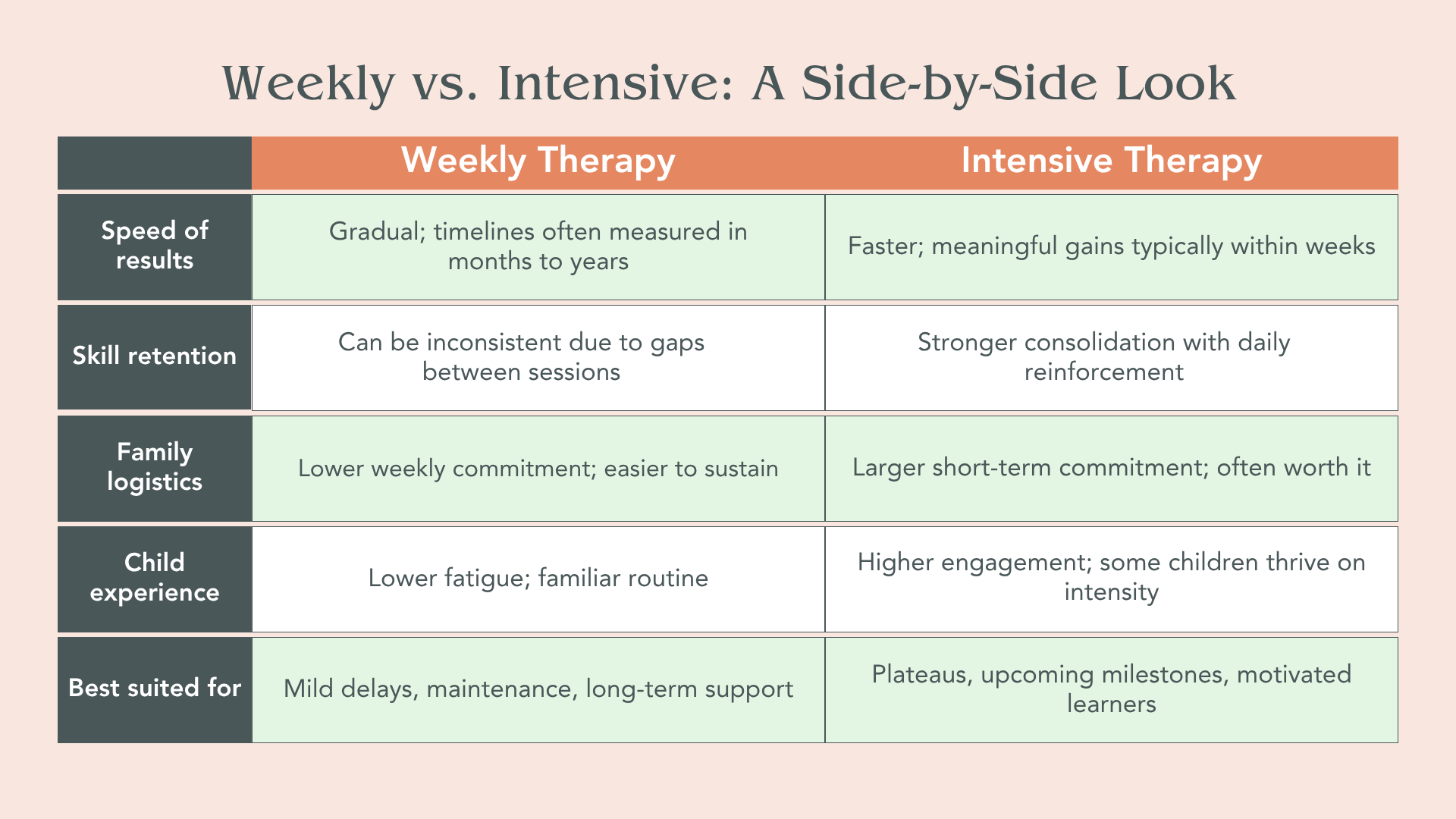
Research consistently shows that intensive formats produce faster results for children who are stuck. And those results tend to last, because the brain has had the chance to fully consolidate new skills rather than partially learn them.
That said, intensive therapy isn't the right fit for every child or every family. Some children do best with a slower, more predictable schedule. Some families can't manage the short-term commitment logistically. Weekly therapy remains a genuinely strong option when the timing and the child's needs align with what it offers.
Signs Your Child May Be Ready for an Intensive Program
Not sure which path fits your child? Here are some clear signals that an intensive approach could be the right next step.
It might be time to consider intensive therapy if:
Progress has stalled for three or more months despite consistent weekly sessions
Skills learned in therapy aren't carrying over to daily life at home or school
A significant milestone is coming up, like school entry, an IEP evaluation, or a key social situation
Your child is clearly motivated and trying, but the week-to-week gap keeps working against them
Your family is in a place where you can commit to a focused push for a defined period of time
None of these alone are a definitive answer. But together, they're a strong signal that it's time to have a different conversation with your child's care team.
The Neuroadaptive Intensive Difference
At MyoSpeech Solutions, our Neuroadaptive Intensive Program was built specifically for children who have plateaued. It's not a compressed version of standard therapy. It's a purpose-built approach that treats the nervous system as the starting point.
What makes it different
Rather than applying the same protocol to every child, our team assesses how each child's nervous system processes sensory and motor information, then builds the program around that individual profile. Pacing adjusts in real time based on how your child is responding. Goals are specific, not general.
Our team brings deep expertise across speech-language pathology, orofacial myology, and pediatric feeding. This matters because many children who plateau in weekly therapy are dealing with more than one overlapping challenge. Seeing those connections clearly changes the outcome.
Serving families across the NYC metro area
We work with families throughout the New York City area, and we regularly see children who travel specifically for this program. If you've been wondering whether a more focused approach could make a real difference, we'd love to help you think it through.
Learn how our Neuroadaptive Intensive Therapy™ works.
The Format Matters More Than You Think
If your child has been working hard in weekly therapy and progress feels stuck, hear this: that is not a reflection of your child's potential.
It may simply mean the format isn't matched to where they are right now.
You have more options than you may realize, and you are absolutely allowed to ask for something different. Advocating for your child doesn't mean you're being difficult. It means you're paying attention.
If you think an intensive approach might be worth exploring, the best next step is a conversation with our team. We'll help you figure out whether your child is a good candidate for the Neuroadaptive Intensive Program. Schedule Your Free Consultation Today!