ARFID vs. picky eating: what every parent needs to know
Almost every child goes through a phase of turning up their nose at broccoli or refusing anything "green." For most families, this is a normal, if exhausting, part of growing up. But for some parents, mealtime battles go far beyond typical fussiness and it's fair to wonder whether something more serious is going on.
This is where the comparison of ARFID vs picky eating becomes important.
Avoidant/Restrictive Food Intake Disorder (ARFID) is a recognized eating disorder that can look like "extreme picky eating" on the surface but is fundamentally different in cause, severity, and impact on a child's health. Understanding the distinction can help parents know when to simply ride out a phase and when to seek professional support.

What Is Picky Eating?
Picky eating is extremely common, especially in toddlers and young children. It typically involves:
Preferring a limited but still varied set of "safe" foods
Being resistant to new foods (neophobia) that usually eases with repeated, low-pressure exposure
Refusing specific foods based on taste, texture, or appearance, while still eating enough across food groups
Growing out of the pickiest phase over months or years, often by school age
Maintaining normal growth, weight, and energy levels despite a narrower diet
Picky eating can be frustrating, but it generally doesn't interfere with a child's nutrition, growth, or day-to-day functioning in a significant way.
What Is ARFID in Children?
Avoidant restrictive food intake disorder is a diagnosable eating disorder included in the DSM-5. Unlike picky eating, ARFID in children involves food avoidance or restriction severe enough to cause real medical or developmental consequences. Common drivers include:
Sensory sensitivity — intense aversion to certain textures, smells, colors, or temperatures of food
Lack of interest in eating — some children simply don't feel hunger cues strongly or find eating uninteresting or effortful
Fear-based avoidance — often following a frightening experience like choking, vomiting, or a severe allergic reaction, leading to avoidance of entire categories of food
ARFID is not about wanting to be thin or body image concerns (which distinguishes it from disorders like anorexia). A child with ARFID may eat only a handful of "safe" foods total, sometimes just five to ten items, and may show real distress, gagging, or panic when presented with unfamiliar or feared foods.
ARFID vs Picky Eating: Key Differences
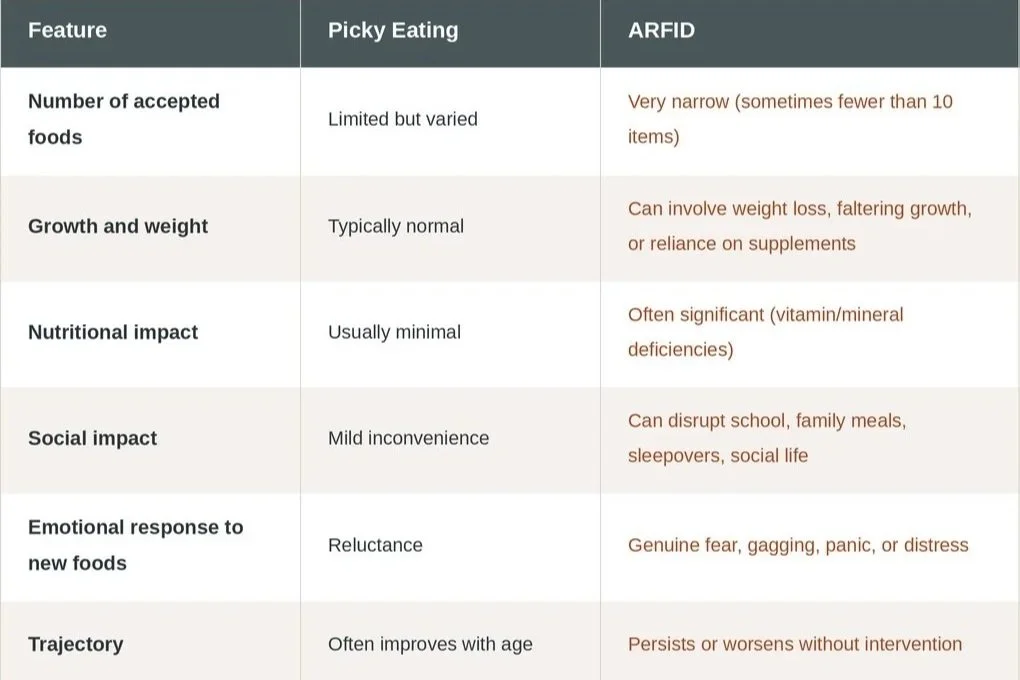
Warning Signs That Point to ARFID
While only a qualified clinician can diagnose ARFID, parents may want to seek an evaluation if their child shows:
Weight loss, poor weight gain, or growth that has plateaued
Dependence on nutritional supplements or a very restricted list of "safe" foods
Anxiety, meltdowns, or physical distress (gagging, vomiting) around new or non-preferred foods
Avoidance of entire food groups or textures (e.g., all "wet" foods, all fruits, anything with visible seasoning)
Mealtime avoidance affecting school, friendships, or family activities
No underlying concern about weight or body shape, ruling out other eating disorders
Why the Distinction Matters
Labeling every selective eater as having ARFID can cause unnecessary alarm, while dismissing genuine ARFID as "just a phase" can delay treatment and allow nutritional or developmental problems to worsen. Getting the ARFID vs picky eating distinction right helps parents:
Avoid unnecessary pressure or punishment around food, which tends to backfire either way
Get appropriate medical monitoring if a child's growth or nutrition is at risk
Access evidence-based treatment, such as therapy involving gradual food exposure, occupational therapy for sensory issues, or feeding-focused programs, when ARFID is confirmed
Reduce family stress by understanding that ARFID is not a discipline problem or a matter of "just trying harder"
When to Talk to a Professional
Consider reaching out to a pediatrician, registered dietitian, or feeding specialist if your child's eating:
Is affecting their growth, energy, or nutrition
Is limited to a very small number of foods for months or longer
Involves visible fear, gagging, or panic — not just dislike
Is getting narrower over time rather than gradually expanding
Is disrupting family life, school, or social situations
A pediatrician can rule out medical causes, track growth trends, and refer to specialists (such as a feeding therapist or psychologist) if ARFID is suspected.
Frequently Asked Questions
Is ARFID the same as being a picky eater?
No. Picky eating is a common developmental stage with a varied, if limited, diet and normal growth. ARFID is a diagnosable eating disorder involving a much narrower diet, genuine distress around food, and potential impacts on growth, nutrition, or daily life.
Can picky eating turn into ARFID?
Picky eating doesn't automatically become ARFID, but in some children, avoidance patterns intensify rather than resolve. If restriction is worsening over time rather than easing, it's worth having it evaluated.
What causes ARFID in children?
ARFID can stem from sensory sensitivities to taste or texture, low interest in food and eating in general, or fear following a negative experience like choking or vomiting. It's often a combination of these factors rather than a single cause.
Does ARFID go away on its own?
Without support, ARFID often persists rather than resolving naturally, unlike typical picky eating. Treatment such as gradual, supported food exposure can meaningfully expand a child's diet and reduce mealtime distress.
Is ARFID only in children?
No. ARFID can occur at any age, though it's frequently identified in childhood. Some people carry ARFID patterns into adolescence or adulthood if it isn't addressed.
The Bottom Line
Most selective eaters are simply picky, and that pickiness tends to soften with time, patience, and low-pressure exposure to new foods. But when a child's diet is extremely limited, growth or nutrition is affected, or mealtimes involve real fear rather than mild reluctance, it may be more than a phase.
Understanding the difference between ARFID vs picky eating empowers parents to respond with the right level of concern neither dismissing a real problem nor panicking over a normal one and to get their child the right support if it's needed.
Think your child might be showing signs ARFID? Schedule a discovery call to get a clear picture of what's going on and what can help.
This article is for informational purposes only and is not a substitute for professional medical or psychological evaluation. If you're concerned about your child's eating, consult your pediatrician or a qualified feeding specialist.