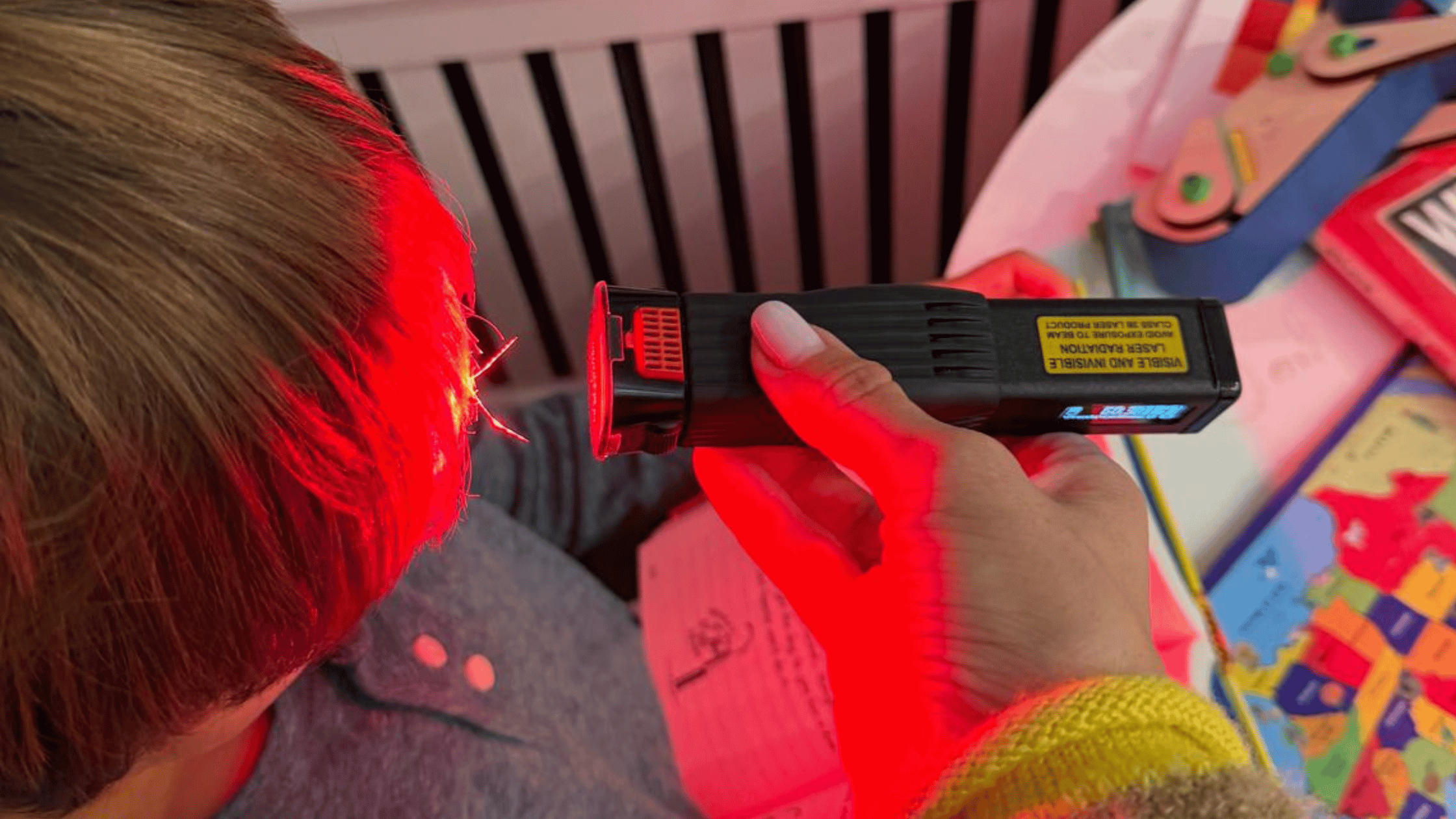
What is photobiomodulation(PBMT/LLLT) and is it safe for kids?
If your child's pediatrician, dentist, physical therapist, or eye doctor has mentioned "photobiomodulation," "PBMT," or "low level laser therapy (LLLT)," you're probably wondering the same thing most parents do: is photobiomodulation for kids safe?
This guide breaks down what the therapy actually is, what pediatric research shows so far, and the questions worth asking before your child tries it.

What Is Photobiomodulation (PBMT/LLLT)?
Photobiomodulation therapy (PBMT) — also called low level laser therapy (LLLT) or "cold laser" therapy — uses specific wavelengths of red or near-infrared light to interact with cells. Unlike surgical or aesthetic lasers, PBMT devices don't cut, burn, or heat tissue. Instead, the light is absorbed by structures inside cells (particularly mitochondria), where it's thought to influence energy production, circulation, and inflammation at a cellular level.
You may see it delivered through:
Laser diodes (true lasers, classified as Class 2, 3B, or similar)
LED arrays (non-coherent light, sometimes marketed as gentler alternatives)
Clinically, PBMT/LLLT is used across several specialties for conditions such as:
Pain and inflammation (musculoskeletal pain, post-procedure swelling)
Wound healing and post-surgical recovery
Dental and orthodontic applications
Oral mucositis (mouth sores) related to cancer treatment
Myopia (nearsightedness) management in some countries
Adjunctive support in neurodevelopmental research settings
Why Is Photobiomodulation Being Used in Children?
Pediatric interest in PBMT has grown alongside a small but expanding body of clinical research. Recent and ongoing studies illustrate the range of applications being explored specifically in children:
Chemotherapy-related mouth sores (oral mucositis): A pediatric oncology study is evaluating daily low-level laser sessions as supportive care alongside standard treatment for children with blood cancers, using a low-power 660 nm laser.
Myopia (nearsightedness) control: Multiple clinical trials have tested red-light PBMT devices in children with low-to-moderate myopia, tracking changes in eye length and vision over months of repeated sessions, alongside dedicated safety monitoring of the retina.
Dental procedures: Randomized trials in pediatric dental clinics have tested LLLT to help reverse the numbness of local anesthetic more quickly in children after procedures like tooth extractions.
Orthodontics: Some studies combine LLLT with functional appliances in growing children to study effects on jaw and joint development.
Neurodevelopmental research: A small number of open-label studies are exploring whether transcranial (through-the-skull) light therapy affects symptoms in children with autism spectrum disorder, though this remains early-stage and experimental.
It's worth noting that many of these are still small trials or feasibility studies rather than large-scale, long-term pediatric safety data — an important distinction for parents to keep in mind.
LLLT Children Safety: What Does the Research Actually Show?
This is the core question, so let's address it directly.
The general safety profile is reassuring — with caveats
Photobiomodulation has been studied in adults for several decades, with a large volume of published research and clinical trials generally reporting no significant tissue-damaging side effects when devices are used within approved power and dosage parameters. The therapy is fundamentally different from higher-powered surgical lasers: it doesn't cut or thermally destroy tissue.
In pediatric-specific contexts, early findings are similarly encouraging:
Myopia-control trials that specifically built in safety monitoring (measuring retinal thickness and visual acuity before and after repeated treatments) have not reported significant adverse structural changes in the study populations followed.
Dental and orthodontic pediatric trials using low-power diode lasers on soft tissue and jaw structures have generally not reported toxicity or serious adverse events.
Oral mucositis studies in adults and adolescents have found no reported toxicity from low-level laser use in or around the mouth.
But "generally safe" isn't the same as "risk-free" or "well-established long-term"
A few important nuances matter for parents:
Laser classification matters. LLLT devices span a range of laser classes (commonly Class 2 or Class 3B), and higher-class devices carry a documented eye-hazard risk with direct or prolonged viewing. Legitimate providers use protective eyewear for both the child and the practitioner during treatment — if that's not offered, ask why.
Pediatric-specific long-term data is still limited. Most large safety datasets come from adult populations. Children's tissues, growth plates, and developing organs (like the eyes and brain) are not simply "small adult" versions, so researchers are still building pediatric-specific evidence, especially for repeated, long-term, or transcranial (head) applications.
Device and protocol matter enormously. Wavelength, power output (measured in mW), treatment duration, and total energy dose all affect both effectiveness and safety. A well-studied protocol from a clinical trial is not the same as an unregulated consumer device.
Not every use case has equal evidence behind it. Pediatric myopia control and oral mucositis support have more robust trial data than some newer, more experimental applications, which should be treated with appropriately more caution and skepticism.
Practical Safety Questions Parents Should Ask
Before agreeing to PBMT/LLLT for a child, it's reasonable to ask a provider:
What is the device's laser classification, and what safety measures (like eyewear) are used?
Is this specific application backed by pediatric clinical trial data, or is it being used off-label/experimentally?
What wavelength, power, and session length will be used, and how does that compare to published pediatric protocols?
Are there any conditions that would make this inadvisable for my child (e.g., photosensitivity, certain medications, active cancer near the treatment site, eye conditions)?
What side effects, if any, have been observed in your practice or in the relevant research?
Who Should Be Extra Cautious
While serious adverse events are rare in the published literature, providers generally advise added caution — meaning a more detailed discussion with a physician first — for children who:
Have known photosensitivity or are on medications that increase light sensitivity
Have an active malignancy directly at or near the proposed treatment site (outside of a supervised oncology protocol)
Have specific eye conditions, if treatment is near or directed at the eyes
Are undergoing treatment as part of an unregulated or non-clinical setting without proper device documentation
The Bottom Line
So, is photobiomodulation safe for kids? Based on current evidence: PBMT/LLLT appears to have a favorable short-term safety profile in the pediatric applications studied so far, particularly when delivered by trained providers using validated devices and protocols with appropriate eye protection. At the same time, pediatric research is still younger and smaller than the adult evidence base, and safety depends heavily on the specific device, dose, and condition being treated.
The most protective step any parent can take is simple: ask questions, request the evidence behind the specific protocol proposed for your child, and make sure the provider treats this as a clinical decision — not a one-size-fits-all wellness trend.
Frequently Asked Questions
Is LLLT painful for children?
No. Most patients, including children, describe PBMT as painless — sessions typically involve mild warmth or no sensation at all, since the light doesn't cut or burn tissue at therapeutic doses.
Is photobiomodulation FDA-approved for children?
Some individual LLLT devices have FDA clearance for specific adult indications (like pain relief), and clearance status varies by device and use case. Pediatric applications are often studied under research protocols rather than broad pediatric approval, so it's important to ask a provider about the specific device and its regulatory status.
How is LLLT different from surgical laser treatment?
Surgical lasers use high power to cut or destroy tissue. PBMT/LLLT uses much lower power levels intended to stimulate cellular activity without damaging tissue.
Can parents use over-the-counter red light devices on their kids at home?
This is a common question, but it deserves caution rather than a blanket answer. Consumer devices vary enormously in wavelength, power, and quality control, and pediatric safety data is specific to the studied devices and protocols — not to red light devices in general. Speak with your child's healthcare provider before using any at-home device.
Considering Photobiomodulation for Your Child?
Every child's health history is different, and the right answer depends on the specific condition, device, and protocol being considered. If you're weighing photobiomodulation, low level laser therapy, or another light-based treatment for your child, a conversation with a qualified provider is the best next step.
Book a free discovery call to talk through your child's specific situation, ask questions about safety and evidence, and find out whether PBMT/LLLT is an appropriate option for your family.
This article is for educational purposes only and is not a substitute for professional medical advice. Always consult a qualified pediatric healthcare provider before starting any new therapy for your child.